How to fillet
How to Fillet a Salmon
From the cooler to vacuum-sealed fillets: bleeding, the bloodline, rib bones and pin bones, step by step.
A salmon is a lot of fish to work on, and it rewards doing it right: thick, clean, boneless fillets that grill, smoke or bake beautifully. Whether you’ve got a limit of coho, a cooler of sockeye or one big king, the method is the same. Here’s how to take a salmon from the cooler to vacuum-sealed fillets, including the two parts people get wrong: the rib bones and the pin bones.
What you need
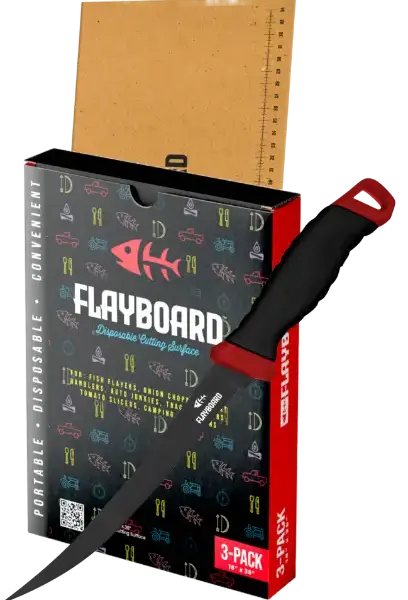
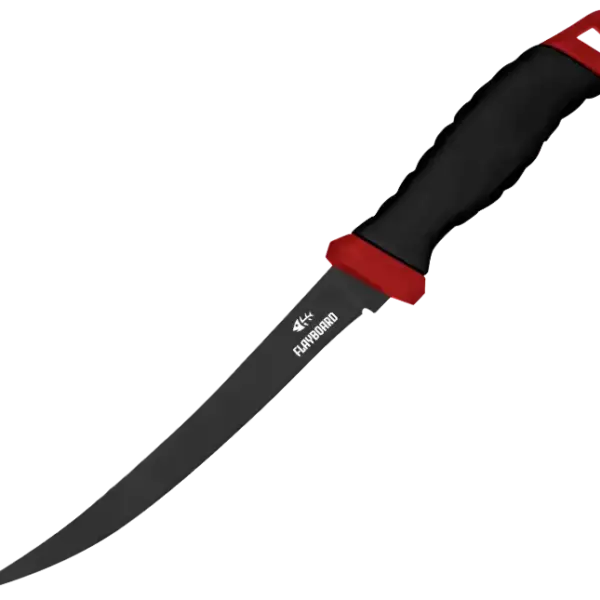
- A fillet knife with some length. The Flayboard 8″ fillet knife is right for coho, sockeye, pinks and smaller kings. For kings over about 15 pounds, a 9-inch or longer blade makes the long cut down the backbone easier.
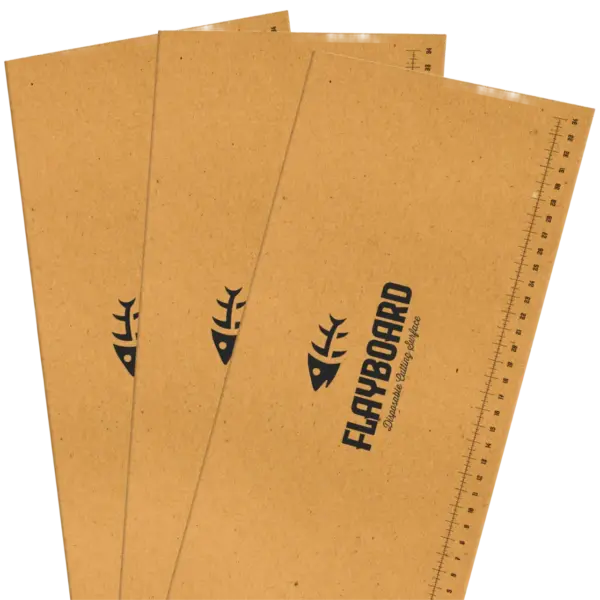
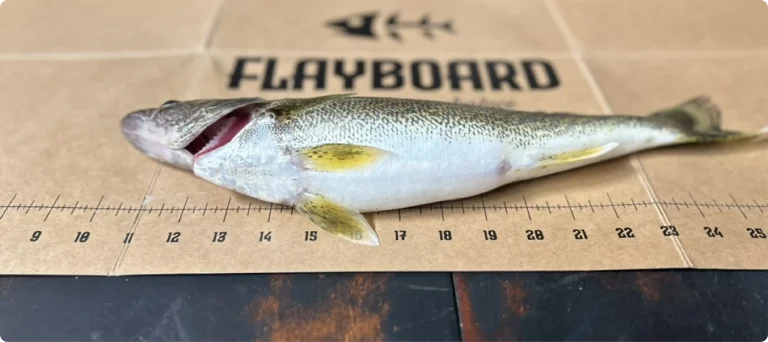
- A big cutting surface. An 18″ x 36″ Flayboard fits most coho, sockeye and pinks with room to work. A big king will hang off the end – lay two boards end to end.
- Fish tweezers or needle-nose pliers for the pin bones.
- A spoon for scraping the bloodline.
- Paper towels, a cooler, and a vacuum sealer if you’re freezing.
Before you start: bleed it, ice it, gut it
Bleed the fish as soon as it’s in the boat. Cut through a gill arch and let it bleed out in the water or a bucket. A bled salmon has cleaner, better-tasting meat, and the fillets look better too.
Get it cold fast. Salmon is oily and soft, and warm flesh turns mushy and hard to cut. Slush ice in the cooler is ideal.
Gut it and clean out the bloodline. Open the belly from the vent to the gills and pull the guts. Along the underside of the backbone is a dark red strip covered by a thin membrane – the kidney, usually called the bloodline. Slit the membrane and scrape it out with a spoon, then rinse the cavity.
Scale it only if you’re keeping the skin. Grilling or smoking skin-on? Scrape the scales off from tail to head first. If you’re skinning the fillets, skip it.
How to fillet a salmon, step by step
1. Lay it on its side
Belly toward you, head away from your knife hand, on a flat surface that won’t slide.
2. Cut behind the head
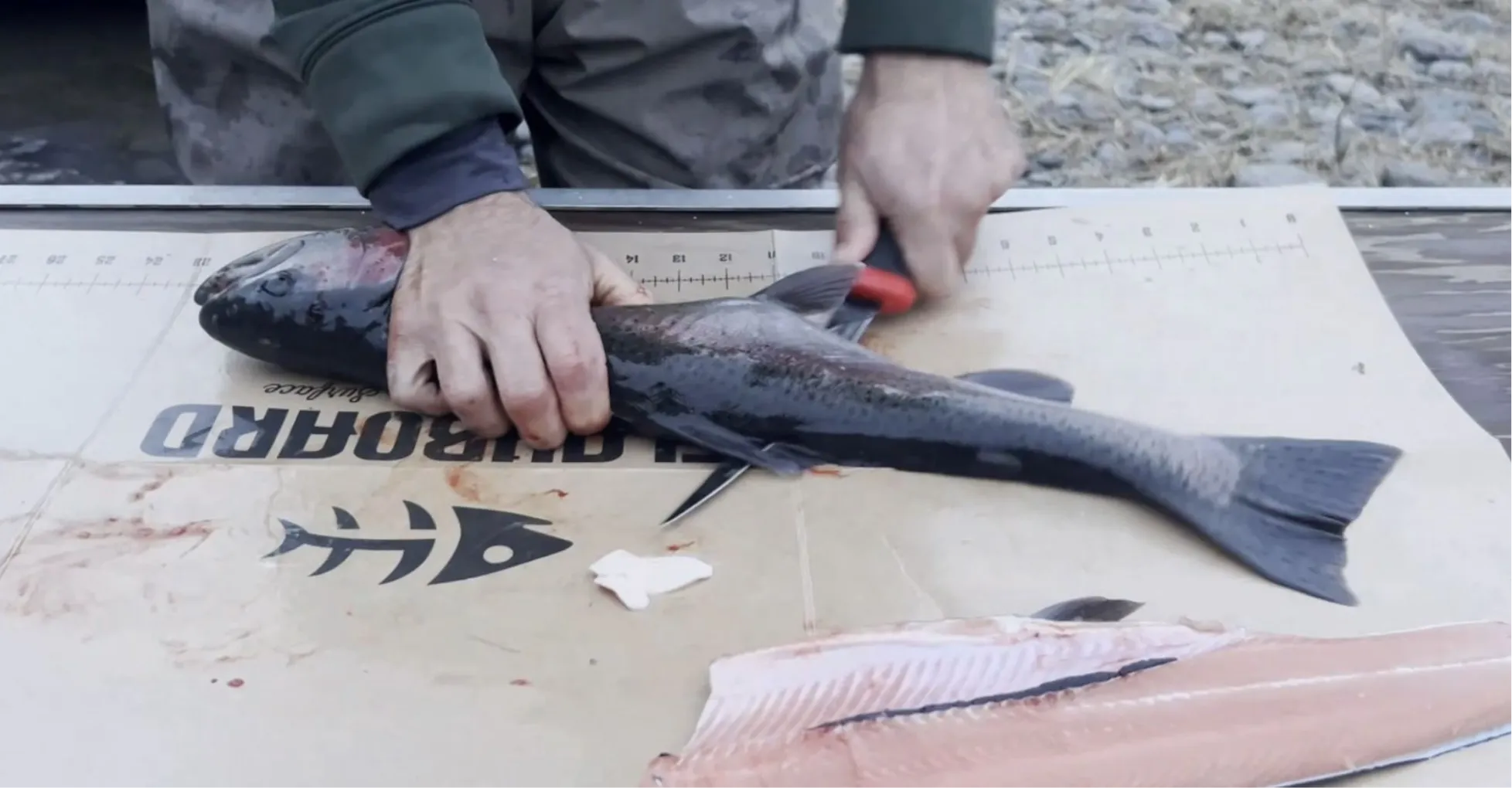
Make a cut behind the gill plate and pectoral fin, angled slightly toward the head, down to the backbone. On a big fish this takes some pressure – salmon bones are heavier than a walleye’s or a trout’s.
3. Run the blade down the backbone
Turn the knife flat with the edge toward the tail and slice along the top of the backbone in long, smooth strokes. Lift the fillet with your other hand as you go so you can see where you’re cutting. On salmon, most people cut straight through the rib bones along the spine rather than trying to ride over them – the ribs are big and there’s good meat between them. You’ll remove them in a minute.
4. Free the fillet
Cut all the way through at the tail and set the fillet aside skin-side down.
5. Flip and repeat
Turn the fish over and take the second fillet the same way. On the second side, the backbone is underneath, so keep the blade pressed lightly against it as you work toward the tail.
6. Remove the rib bones
With the fillet skin-side down, start at the thick end where the ribs begin. Slide the blade just under the first rib, angle it slightly upward, and follow the curve of the ribs out toward the belly in one smooth pass. You’ll lift the whole rib section away as a thin sheet, taking almost no meat with it.
7. Trim the belly
The thin bottom edge of the belly is fatty. Trim off the ragged edge and any gray fat. If you have a smoker, keep the belly strips – they’re rich and smoke beautifully.
8. Pull the pin bones
Run your fingertip down the thick center of the fillet, head end to tail. You’ll feel a row of small pin bones sticking up. Grip each one with tweezers or pliers and pull it out toward the head end of the fillet, at the same angle the bone is pointing. Pulling toward the tail tears the meat.
9. Skin it, or don’t
For grilling, smoking or baking, leave the skin on – it holds the fillet together. To take it off, start at the tail, slide the knife between the skin and the meat with the edge angled slightly down, and push forward while you wiggle the skin side to side.
10. Portion it
Cut the fillets into meal-size pieces before you freeze them. A thick king fillet is easier to cook evenly in sections.
Cleanup
A salmon makes a mess. Roll the head, frame and guts up in the Flayboard, fold it closed, and bag it. Many anglers save the head and frame for crab bait or stock – either way, nothing ends up smeared across your truck.
Storing salmon fillets
Fresh salmon keeps a day or two in the coldest part of the fridge, patted dry and wrapped tight. To freeze it, vacuum seal each portion with as much air removed as you can get, label the bag with the species, date and weight, and freeze flat. Vacuum-sealed salmon holds its quality for up to six months.
Salmon filleting questions
Do you need to scale a salmon before filleting?
Only if you’re going to cook it with the skin on. If you skin the fillets, the scales come off with the skin.
Should you gut a salmon before you fillet it?
Yes, and the sooner the better. Gutting and cleaning out the bloodline keeps the meat fresher while the fish waits in the cooler.
What’s the white stuff on cooked salmon?
That’s albumin, a protein that pushes out of the meat as it cooks. It’s harmless, and gentler cooking makes less of it.
How long should a salmon fillet knife be?
Eight inches for most salmon. Nine inches or longer if you regularly clean big kings.
Steelhead are close cousins and fillet much the same way – see our steelhead guide, with video. Or start with how to fillet any fish.