How to fillet
How to Fillet a Trout
Clean pan-size trout to cook whole, or fillet the big ones. Both methods, step by step.
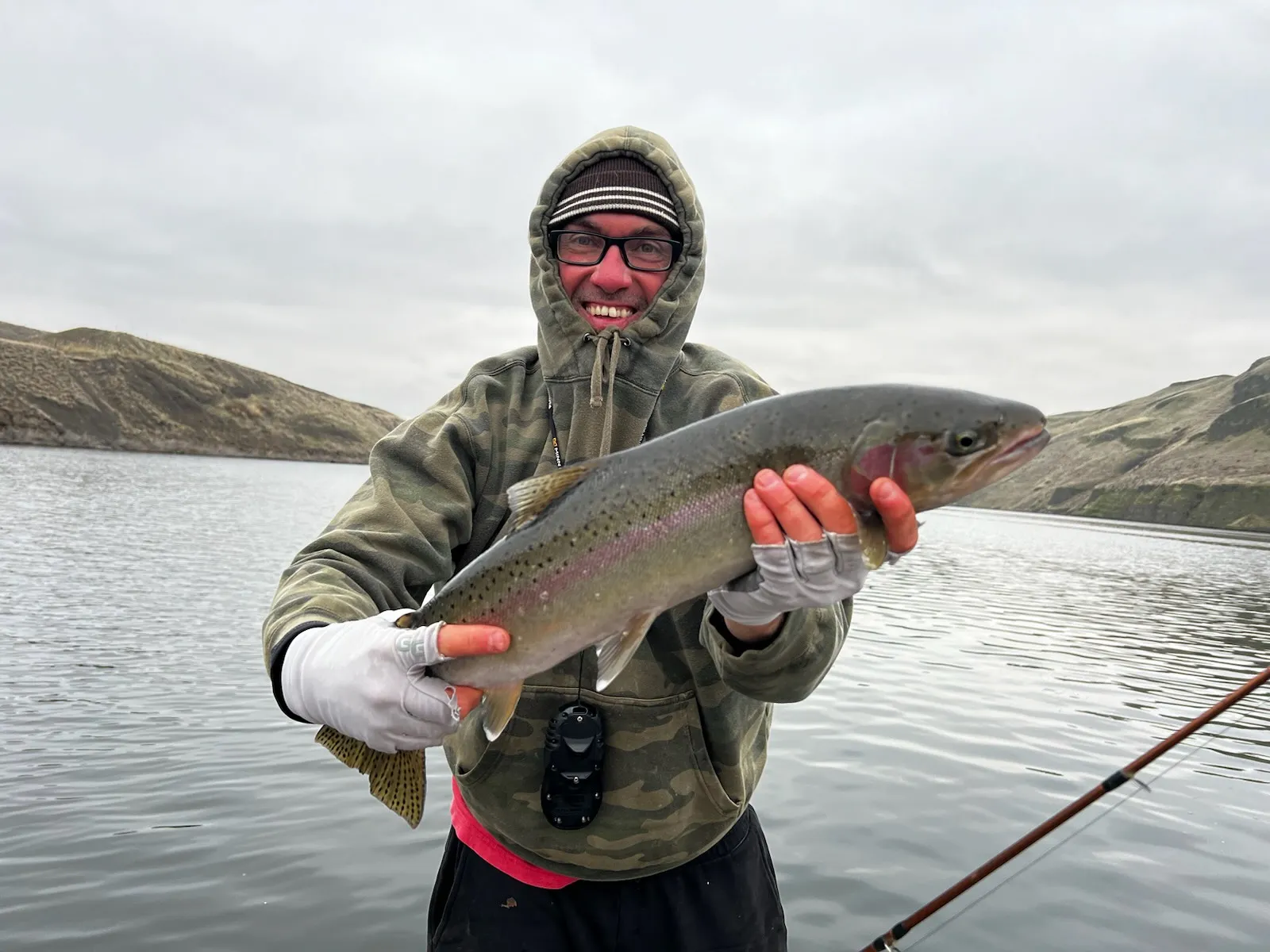
Trout give you two options. Pan-size fish under about 12 inches are usually cleaned and cooked whole, because there’s not much meat to lose and the bones lift out easily once they’re cooked. Bigger rainbows, browns, cutthroat and lake trout are worth filleting. This guide covers both, so you can handle anything from a stocker to a lake trout.

What you need
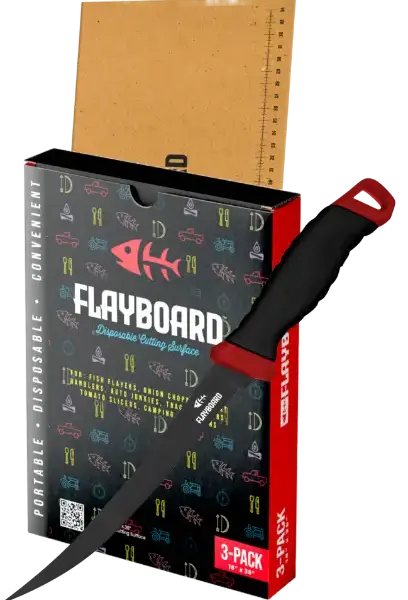
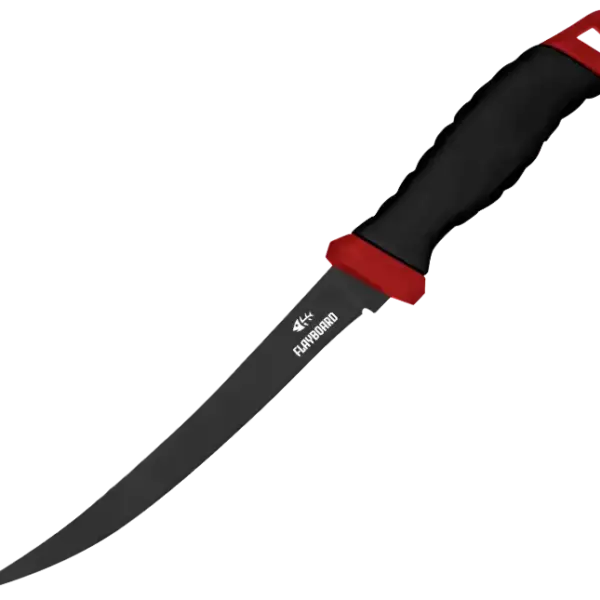
- A thin, flexible fillet knife. Six to seven inches is plenty for pan-size trout. For big rainbows and lake trout, the Flayboard 8″ fillet knife gives you the length for one clean pass down the backbone.
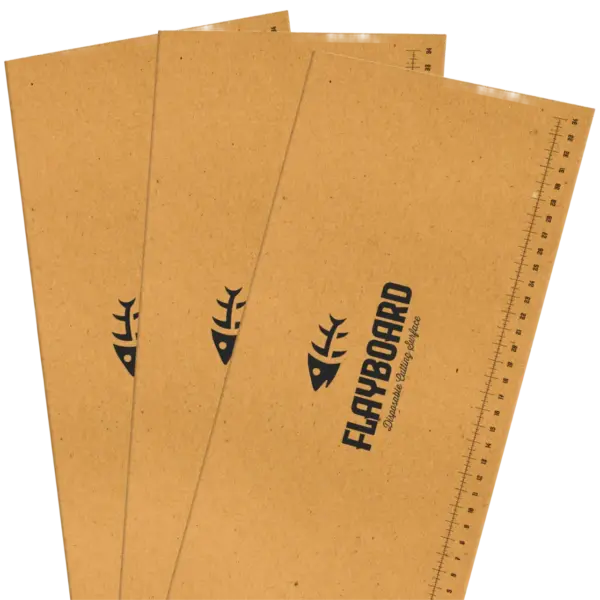
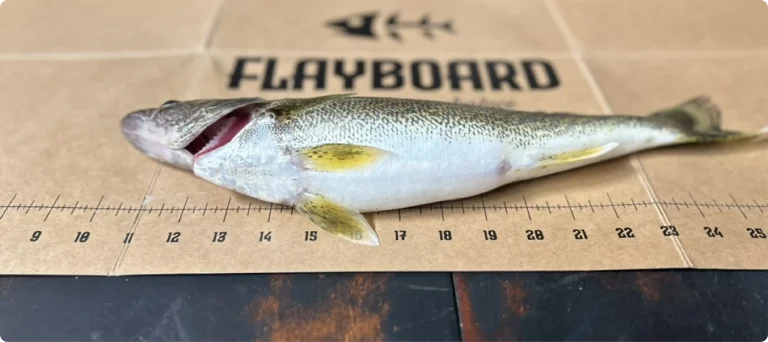
- A flat surface. An 18″ x 36″ Flayboard holds a whole stringer at a campsite or the boat launch, and the built-in ruler is handy where there are length limits.
- Tweezers for pin bones on bigger fish.
- Paper towels and a cooler.
Option 1: Clean a pan-size trout to cook whole
- Open the belly. Hold the trout belly-up. Insert the tip of the knife in the vent and cut forward to the base of the gills. Keep the cut shallow so you don’t puncture the guts.
- Pull the gills and guts. Cut through the narrow strip of skin under the jaw. Hook a finger behind the gills and pull toward the tail – the gills and guts come out together.
- Scrape the bloodline. Run your thumbnail or a spoon along the dark line under the backbone to clear it out.
- Rinse and cook. A quick rinse inside and out, and it’s ready for the pan. Trout scales are tiny, so there’s no need to scale. Once it’s cooked, lift the backbone out by the tail and most of the bones come with it.
Option 2: Fillet a bigger trout
1. Lay the trout on its side
Belly toward you, head away from your knife hand. Wipe off the slime first so it doesn’t slip.
2. Cut behind the head
Slice down behind the gill plate and pectoral fin, angled slightly toward the head, until you touch the backbone.
3. Follow the backbone
Turn the blade toward the tail and run it along the backbone with light, smooth strokes. Trout have fine ribs and soft flesh, so let a flexible blade ride up over the rib cage instead of cutting through it.
4. Finish at the tail
Cut through at the tail to free the fillet, or stop just short and leave it hinged if you plan to skin it.
5. Flip and repeat
Take the second fillet off the other side the same way.
6. Pin bones
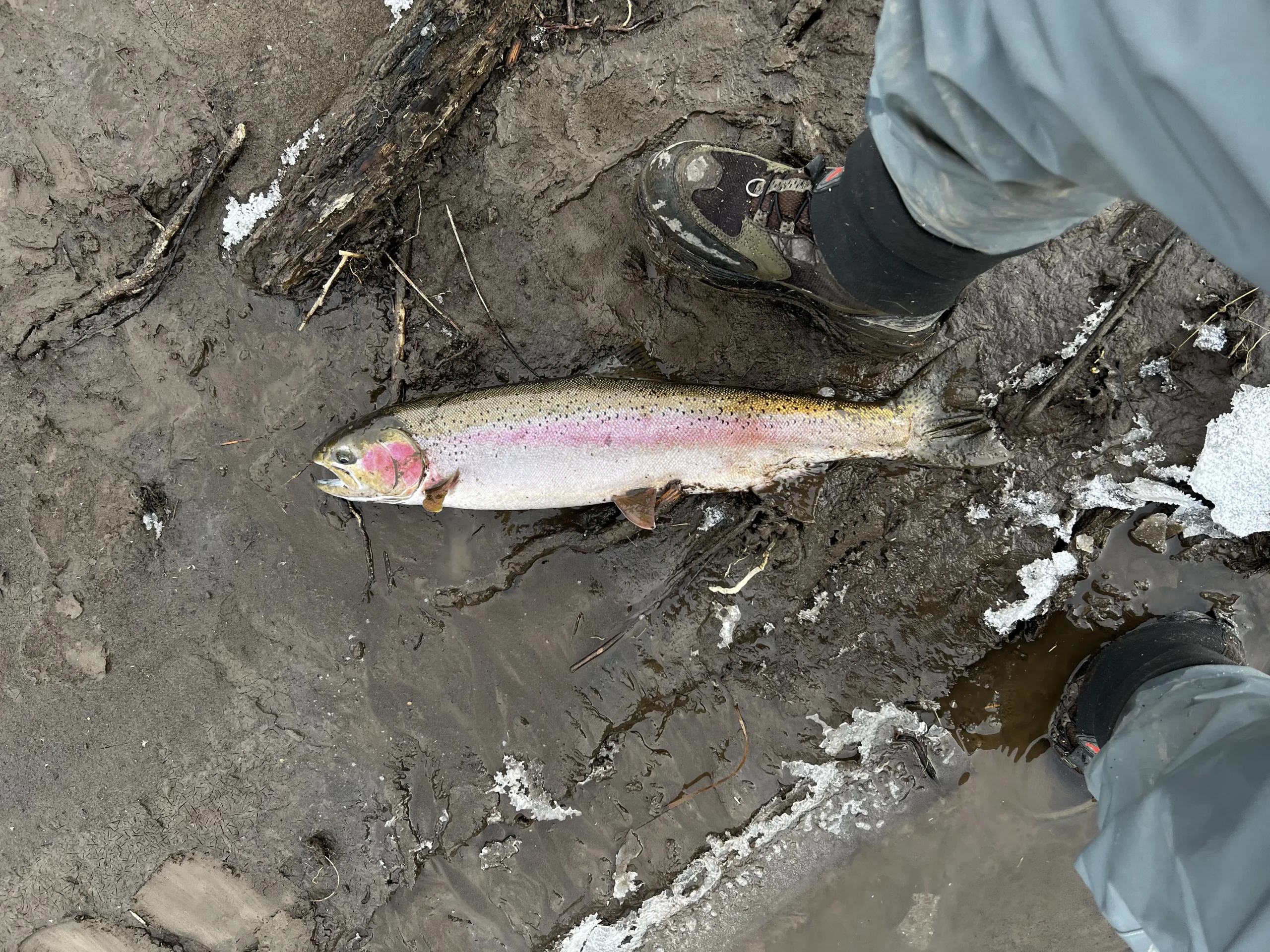
Larger trout have a row of fine pin bones down the center of the front half of the fillet. Feel for them with a fingertip and pull them with tweezers toward the head end, or cut a narrow V along the line and lift the strip out.
7. Skin it or leave it
Trout skin is thin and crisps up nicely in a hot pan, so most people leave it on. To remove it, slide the knife between skin and meat at the tail, angle the edge slightly down, and push forward while wiggling the skin.
8. Rinse, dry and chill
Rinse quickly in cold water, pat dry, and get the fillets on ice.
Lake trout
Lake trout get big and fatty. Fillet them the same way, then trim off the thin, oily belly strip and any dark fat along the lateral line on the skin side – that’s where the strong flavor lives. Skinning lake trout and trimming that fat makes a big difference on the plate.
Cleanup
Fold the heads, guts and skins up in the Flayboard and toss it. At a campsite, that means no fish scraps on the picnic table and nothing to wash in a bucket.
Storing trout
Trout is best within a day or two. Keep it in the coldest part of the fridge, patted dry and wrapped tight. For the freezer, vacuum seal it and use it within a few months – trout is delicate and loses texture faster than salmon or walleye.
Trout filleting questions
Do you need to scale a trout?
No. Trout scales are so small they’re not worth removing, and they cook right into the skin.
Should I fillet a small trout?
For trout under about 12 inches, cleaning and cooking whole wastes less meat. Fillet the bigger ones.
How is a steelhead different?
A steelhead is a sea-run rainbow trout. They’re bigger, with tougher skin and heavier bones, so the technique is closer to salmon. See our steelhead guide.
More guides: how to fillet any fish, walleye and salmon.