How to fillet
How to Fillet a Walleye
Boneless walleye fillets in ten steps, with no scaling and no Y-bones, plus the cheeks most people throw away.
Walleye might be the best-eating fish in fresh water, and they’re one of the easiest to fillet once you know where the bones are. You don’t need to scale them, they have no Y-bones, and a sharp knife will take a limit of eaters down to clean, boneless fillets in a few minutes a fish. Here’s exactly how we do it, plus the part most people throw away: the cheeks.
What you need
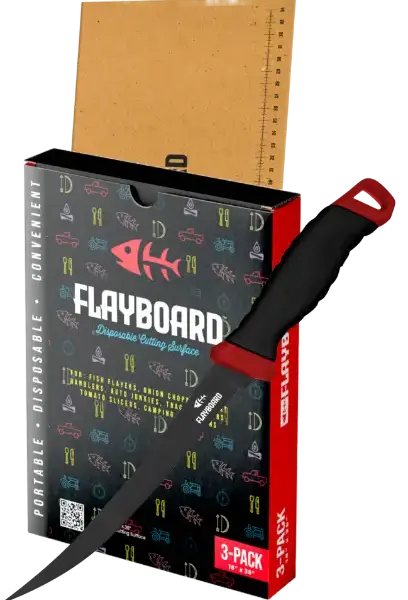
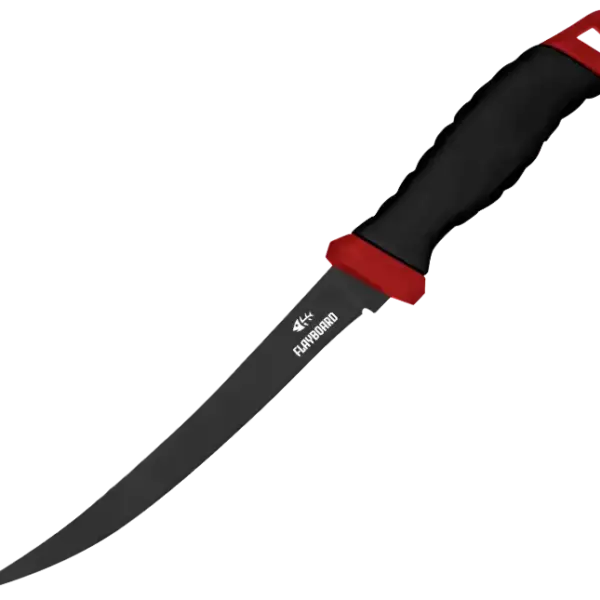
- A 7- to 8-inch flexible fillet knife. The Flayboard 8″ fillet knife handles everything from 15-inch eaters to 10-pound river fish.
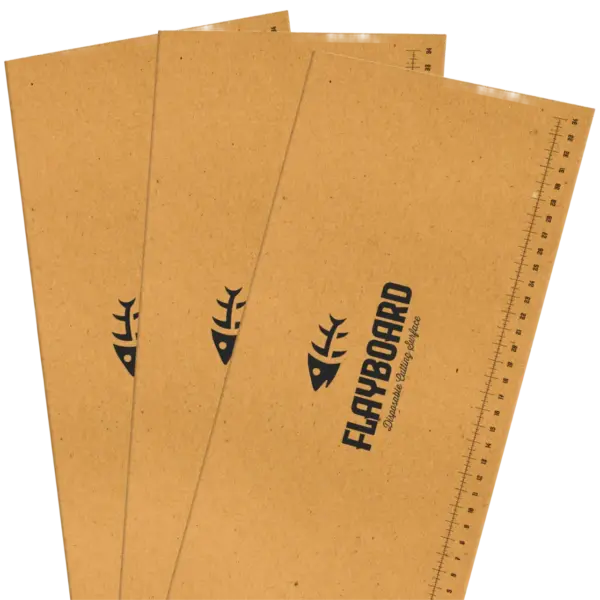
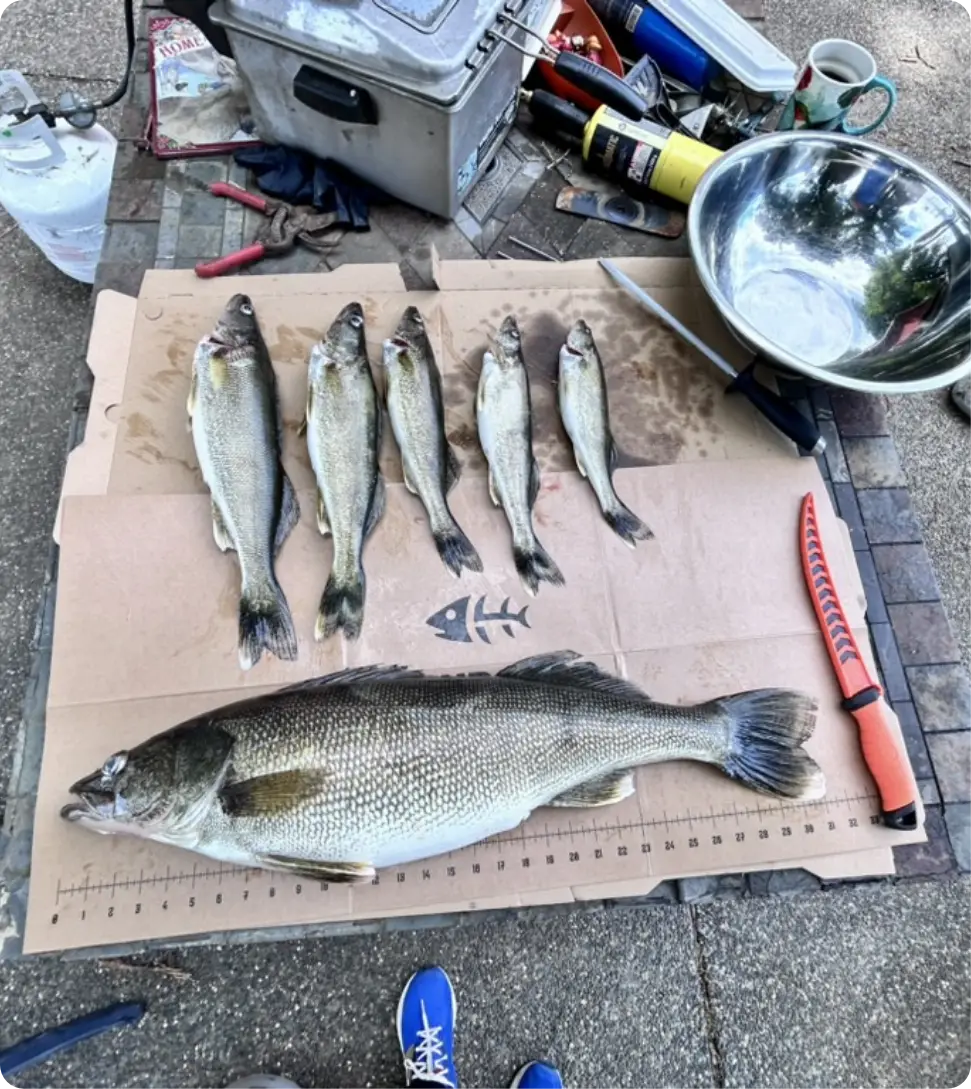
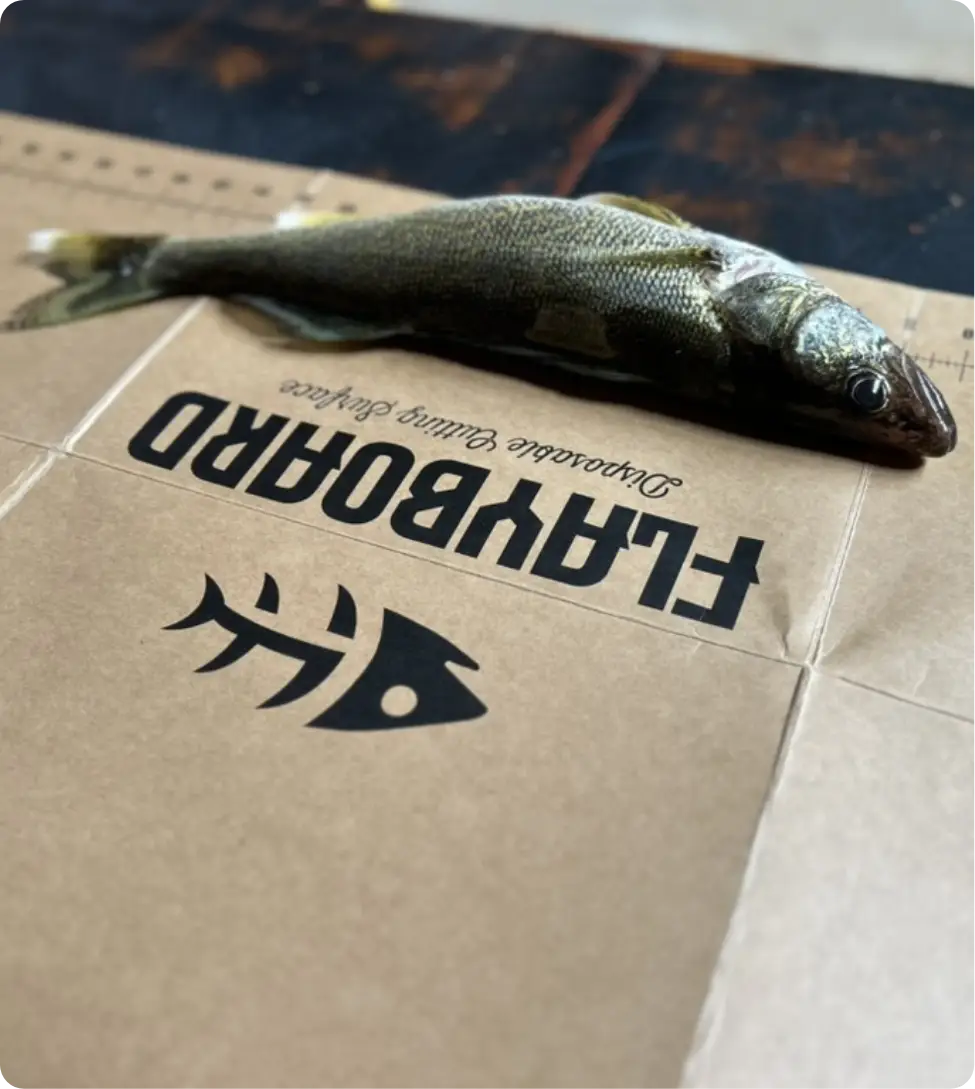
- A cutting surface longer than the fish. An 18″ x 36″ Flayboard fits a big walleye with room to spare, and the ruler printed along the edge lets you check length before you cut.
- Needle-nose pliers for the pin bones.
- Paper towels, a cooler and zip-top or vacuum bags.
Before you start
Measure first. A lot of walleye water has a slot or minimum size. Lay the fish on the Flayboard, nose at zero, and read the length off the ruler before you make a cut.
Keep them cold. Walleye flesh is soft and delicate. A fish that’s been on ice for an hour fillets much cleaner than one that’s been sitting in a warm livewell.
Wipe off the slime. A quick pass with a paper towel keeps the fish from sliding around while you work.
Know your local rules. Some states require fillets to keep a patch of skin until you’re off the water so the species can be identified. If that’s you, leave the skin on until you’re home.
How to fillet a walleye, step by step
1. Lay the fish on its side
Belly toward you, head pointing away from your knife hand. Hold the head down with your other hand.
2. Cut behind the gill plate
Slice down just behind the gill plate and the pectoral fin, angling the blade a little toward the head so you don’t leave the thick meat behind the head on the carcass. Stop when you feel the backbone.
3. Run the knife down the backbone
Turn the blade flat, edge toward the tail, and slide it along the top of the backbone. Keep the blade riding on the bones – you’ll feel it ticking along the spine. When you reach the rib cage, let the knife ride up and over the ribs rather than cutting through them. Walleye ribs are thin, and going over them leaves the whole rib cage on the carcass.
4. Stop before the tail
Run the knife to about half an inch from the tail, then flip the fillet over so it lies skin-side down, still hinged to the fish. That attached tail is your handle for skinning.
5. Skin the fillet
Turn the knife around and slide it between the skin and the meat at the tail. Angle the edge slightly down toward the skin, pinch the tail tight against the board, and push the blade forward while you wiggle the skin side to side. Walleye skin is tough, so it comes away cleanly in one piece.
6. Flip the fish and repeat
Do the same on the other side. You now have two skinless fillets and a carcass with the rib cage still attached.
7. Trim the belly
Along the bottom edge of each fillet is a thin strip of belly meat that can hold a little fat and the tips of a few rib bones. Trim off the thin edge if you see bone or gray fat.
8. Take out the pin bones
Run your fingertip down the middle of the fillet from the thick end. On the front third you’ll feel a short row of fine pin bones along the center line. You can pull them one at a time with pliers, tugging toward the head end. The faster way is a V-cut: make a shallow cut on each side of the bone line, angled toward each other, and lift out the thin strip. On small eaters, many anglers simply cut the fillet in half lengthwise along the line and trim the bones off one piece.
9. Don’t skip the cheeks
Walleye cheeks are the best bite on the fish. Below and behind the eye there’s a round pocket of meat about the size of a quarter on each side of the head. Cut a circle around it with the tip of the knife, peel the skin back, and scoop the cheek out with the blade. Cook them with the fillets.
10. Rinse, dry and get it on ice
A quick rinse in cold water, pat dry with paper towels, and into a bag on ice.

Cleanup
This is where the Flayboard pays for itself. Roll the carcasses, skins and scraps up inside the board, fold it closed, and drop it in a trash bag. No slime on the tailgate, the dock or the kitchen counter, and nothing to scrub.
Storing walleye fillets
Fresh walleye keeps a day or two in the coldest part of the fridge, patted dry and wrapped tight. For longer, vacuum seal the fillets in meal-size portions, label them with the date, and freeze. Vacuum-sealed walleye holds its quality for several months.
Walleye filleting questions
Do walleye have Y-bones?
No. Y-bones are a northern pike thing. Walleye have a short row of fine pin bones in the front third of each fillet, and the V-cut above takes them out in one strip.
Do you need to scale a walleye?
Not if you skin the fillets, which is how most people cook walleye. The scales come off with the skin.
What size fillet knife is best for walleye?
Seven to eight inches. Long enough to make one smooth pass down the backbone on a big fish, flexible enough to ride over the ribs on a small one.
Should you cut through the ribs or over them?
Over them, on most walleye. The ribs are thin and there’s very little meat between them, so riding the knife over the rib cage is faster and leaves no bones to pick out later.
Got your fillets? Now go catch some more. And if you’re filleting other species, see how to fillet any fish, or the guides for salmon, trout and steelhead.